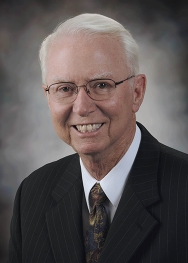
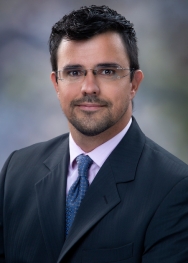
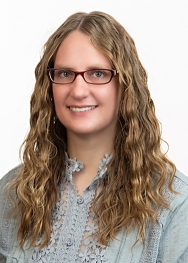
Clark, Robert A.School of Medicine |
|
| 8/2006 - Present | Assistant Vice President for Clinical Research and Director, Institute for Integration of Medicine and Science | University of Texas Health Science Center at San Antonio, San Antonio, TX |
| 8/2006 - Present | Professor and Associate Chair for Research | University of Texas Health Science Center at San Antonio, Medicine, San Antonio, TX |
| 9/1995 - Present | Professor | University of Texas Health Science Center at San Antonio, Physiology, San Antonio, TX |
| 7/1994 - Present | Attending Physician | University Hospital, University Health System, San Antonio, TX |
| 7/1994 - Present | Staff Physician | South Texas Veterans Health Care System, Audie L. Murphy Division, San Antonio, TX |
| Year | Degree | Discipline | Institution |
| 1973 | Residency | Chief Resident in Medicine | Harborview Medical Center Seattle , WA |
| 1972 | Postdoctoral Fellowship | Infectious Diseases | Laboratory of Clinical Investigation, NIAID, NIH Bethesda , MD |
| 1969 | Residency | Resident in Medicine | Columbia Presbyterian Medical Center New York , NY |
| 1968 | Internship | Medicine | University of Washington Hospital Seattle , WA |
| 1967 | MD | Medicine (Alpha Omega Alpha) | Columbia University, College of Physicians and Surgeons New York , NY |
| 1963 | AB | Mathematics (Magna Cum Laude) | Syracuse University Syracuse , NY |
Biology of Aging- Basic research on biochemical and cellular pathways involved in the aging process. |
Calcium-Binding Proteins- Basic research on structure, function, and regulation of endoplasmic reticulum calcium-binding proteins. |
Infectious Diseases- Clinical infectious diseases. |
Inflammation- Basic research on mechanisms of the acute inflammatory response. |
Internal Medicine- Clinical general internal medicine. |
Neurodegenerative Disorders- Basic research on the biochemical and cellular pathways involved in neurodegenerative disorders, especially Parkinson''s disease. |
Reactive Oxygen Species- Basic research on the mechanisms of generation of reactive oxygen species and their role in antimicrobial function, tissue injury, degenerative diseases, and aging. |
| Date | Description | Institution | # Students |
| 4/2005 - Present | Membership on Supervising Committee | University of Texas Health Science Center | |
| 2/2004 - Present | Post-Doctoral Student Supervision | University of Texas Health Science Center at San Anotnio | |
| 7/1994 - Present | Clin Infectious Disease | The University of Texas Health Science Center | 4 students |
| 7/1994 - Present | Medicine Clerkship (gen) | The University of Texas Health Science Center | 2 students |
| 7/1994 - Present | Intro to Clinical Medicine | The University of Texas Health Science Center | 20 students |
Journal Article |
| Venkatachalam K, Venkatesan B, Valente AJ, Melby PC, Nandish S, Reusch JE, Clark RA, Chandrasekar B. WISP1, a pro-mitogenic, pro-survival factor, mediates tumor necrosis factor-alpha (TNF-alpha)-stimulated cardiac fibroblast proliferation but inhibits TNF-alpha-induced cardiomyocyte death J Biol Chem 2009 May;284(21):14414-14427. |
| Shostakovich-Koretskaya L, Catano G, Chykarenko ZA, He W, Gornalusse G, Mummidi S, Sanchez R, Dolan MJ, Ahuja SS, Clark RA, Kulkarni H, Ahuja SK. Combinatorial content of CCL3L and CCL4L gene copy numbers influence HIV-AIDS susceptibility in Ukrainian children AIDS 2009 Mar;23(6):679-688. |
| Catano G, Kulkarni H, He W, Marconi VC, Agan BK, Landrum M, Anderson S, Delmar J, Telles V, Song L, Castiblanco J, Clark RA, Dolan MJ, Ahuja SK, Delmar JA. HIV-1 disease-influencing effects associated with ZNRD1, HCP5 and HLA-C alleles are attributable mainly to either HLA-A10 or HLA-B*57 alleles PLoS ONE 2008 Nov;3(11):3636-3636. |
| Ahuja SK, Kulkarni H, Catano G, Agan BK, Camargo JF, He W, OConnell RJ, Marconi VC, Delmar J, Eron J, Clark RA, Frost S, Martin J, Ahuja SS, Deeks SG, Little S, Richman D, Hecht FM, Dolan MJ, Kulkarni HR. CCL3L1-CCR5 genotype influences durability of immune recovery during antiretroviral therapy of HIV-1-infected individuals Nat Med 2008 Apr;14(4):413-420. |
| El Jamali A, Valente AJ, Lechleiter JD, Gamez MJ, Pearson DW, Nauseef WM, Clark RA. Novel redox-dependent regulation of NOX5 by the tyrosine kinase c-Abl Free Radic Biol Med 2008 Mar;44(5):868-881. |
| Chandrasekar B, Patel DN, Mummidi S, Kim JW, Clark RA, Valente AJ. Interleukin-18 Suppresses Adiponectin Expression in 3T3-L1 Adipocytes via a Novel Signal Transduction Pathway Involving ERK1/2-dependent NFATc4 Phosphorylation J Biol Chem 2008 Feb;283(7):4200-4209. |
| Valente AJ, Zhou Q, Lu Z, He W, Qiang M, Ma W, Li G, Wang L, Banfi B, Steger K, Krause KH, Clark RA, Li S. Regulation of NOX1 expression by GATA, HNF-1alpha, and Cdx transcription factors Free Radic Biol Med 2008 Feb;44(3):430-443. |
| Dolan MJ**, Kulkarni H**, Camargo JF, He W, Smith A, Anaya JM, Miura T, Hecht FM, Mamtani M, Pereyra F, Marconi V, Mangano A, Sen L, Bologna R, Clark RA, Anderson SA, Delmar J, OConnell RJ, Lloyd A, Martin J, Ahuja SS, Agan BK, Walker BD, Deeks SG, Ahuja SK (** These authors contributed equally as first authors. This article was accompanied by a commentary: Lederman MM, Sieg SF. CCR5 and its ligands: a new axis of evil? Nat Immunol. 2007;8(12):1283-5.). CCL3L1 and CCR5 influence cell-mediated immunity and affect HIV-AIDS pathogenesis via viral entry-independent mechanisms Nat Immunol 2007 Dec;8(12):1324-1336. |
| Valente AJ, El Jamali A, Epperson TK, Gamez MJ, Pearson DW, Clark RA. NOX1 NADPH oxidase regulation by the NOXA1 SH3 domain Free Radic Biol Med 2007 Aug;43(3):384-396. |
| Block K, Gorin Y, Hoover P, Williams P, Chelmicki T, Clark RA, Yoneda T, Abboud HE. NAD(P)H oxidases regulate HIF-2alpha protein expression J Biol Chem 2007 Mar;282(11):8019-8026. |
| Valente AJ, Zhou Q, Qiang M, Lu Z, He W, Ma W, Wang L, Banfi B, Kraus K-H, Clark RA, Li S. Regulation of NOX1 expression by GATA, HNF-1a and Cdx transcription factors (In Press) Free Rad Biol Med 2007 Jan;. |
| Valente AJ, El Jamali A, Epperson TK, Gamez MJ, Pearson DW, Clark RA. NOX1 NADPH oxidase regulation by the NOXA1 SH3 domain Free Rad Biol Med 2007 Jan;43:384-396. |
| He W, Qiang M, Ma W, Valente AJ, Quinones MP, Wang W, Reddick RL, Xiao Q, Ahuja SS, Clark RA, Freeman GL, Li S. Development of a synthetic promoter for macrophage gene therapy Human Gene Therapy 2006 Jan;17(9):949-959. |
| Gonzalez E**, Kulkarni H**, Bolivar H**, Mangano A, Sanchez R, Catano G, Nibbs RJ, Freedman BI, Quinones MP, Bamshad MJ, Murthy KK, Rovin BH, Bradley W, Clark RA, Anderson SA, Oconnell RJ, Agan BK, Ahuja SS, Bologna R, Sen L, Dolan MJ, Ahuja SK (** These authors contributed equally as first authors. This article was accompanied by a commentary: Nolan D, James I, Mallal S. HIV/AIDS. HIV: experiencing the pressures of modern life. Science. 2005;307(5714):1422-4. This work has been cited 254 times in various journals.). The influence of CCL3L1 gene-containing segmental duplications on HIV-1/AIDS susceptibility Science 2005 Mar;307:1434-1440. |
| deGraffenried LA, Hopp TA, Valente AJ, Clark RA, Fuqua SA. Regulation of the estrogen receptor alpha minimal promoter by Sp1, USF-1 and ERalpha Breast Cancer Res Treat 2004 Jan;85:111-120. |
| Clark RA, Valente AJ. Nuclear factor kappa B activation by NADPH oxidases Mech Ageing Devel 2004 Jan;125:799-810. |
Book Chapter |
| Nauseef WM, Clark RA. Granulocytic Phagocytes. In: Mandell GL, Bennett JE, Dolin R, eds. Principles and Practice of Infectious Diseases. (6th ed.). Philadelphia, PA: Elsevier-Churchill Livinstone; 2005. p. 93-117. |
Abstract |
| Lawrence VA, Youngers JA, Pugh JA, Clark RA. NIH Research Funding and Return of Indirect Revenues to Departments and Investigators; 2005 Jan. (Journal of General Internal Medicine; vol. 20, no. supp1). |
| Li SL, He WJ, Qiang M, Wang W, Xiao QF, Valente AJ, Quinones MP, Ahuja SS, Clark RA, Freeman GL. A synthetic promoter drives macrophage expression of ApoE and ameliorates atherosclerosis; 2004 Jan. (Journal of Leukocyte Biology; vol. Suppl). |
Not Specified |
| Venkatachalam K, Venkatesan BA, Valente AJ, Melby PC, Nandish S, Reusch JEB, Clark RA, Chandrasekar B. Novel regulation of WNT1-inducible signaling pathway protein-1 by tumor necrosis factor (TNT)-a in a primary human cardiac fibroblasts Journal of Biological Chemistry 2009 Jan;284(21):144414-144427. |
Other |
| Clark RA, Epperson TK, Valente AJ. Mechanisms of activation of NADPH oxidases Jpn J Infect Dis 2004 Jan;57:22-23. |
Federal |
|
| Funding Agency | NIH, NCRR (UTHSCSA CTSA Application) |
| Title | Institute for Integration of Medicine & Science: A Partnership to Improve Health. |
| Status | Active |
| Period | 5/2008 - 4/2013 |
| Role | Principal Investigator |
| Grant Detail | The University of Texas Health Science Center at San Antonio (UTHSCSA) established the Institute for Integration of Medicine and Science (IIMS) as the home for the Clinical and Translational Science Award (CTSA). Our mission is to achieve optimal integration of clinical and translational research, education, training, and career development across all UTHSCSA schools and among our partner organizations in the South Texas region. IIMS will focus existing and newly developing resources and intellectual capital on advancing the discipline of clinical and translational research for the improvement of human health. Within the context of our collective resources, community focus, and unique regional demographics, we have identified four Specific Aims as the core elements of our CTSA application: Aim 1- To support transformative clinical and translational research by providing a comprehensive infrastructure integrated effectively among our partners for the creation of multidisciplinary clinical research teams; Aim 2- To create the optimal intellectual environment and nurturing atmosphere necessary for the training of future clinical and translational career investigators, building upon existing strengths, partnerships, a diverse trainee pool and strong faculty dedication to mentoring; Aim 3- To develop community-based models that address the best means for translating research findings, focusing on our unique population-specific risk factors, disease burdens and health disparities; Aim 4- To implement robust tracking and outcome evaluation systems across all IIMS programs. The mission of IIMS is sharply focused on public health. Indeed, our primary vision is to work closely with all partners to translate the results of our academic and community-based research for the direct benefit of our regional population. |
| Funding Agency | NIH/NCRR |
| Title | CTSA |
| Status | Active |
| Period | 5/2008 - 4/2013 |
| Role | Principal Investigator |
| Grant Detail | Institute for Integration of Medicine & Science: A Partnership to Improve Health Major goals: Our mission is to achieve optimal integration of clinical and translational research, education, training, and career development across all UTHSCSA schools and among our partner organizations in the South Texas region. IIMS will focus existing and newly developing resources and intellectual capital on advancing the discipline of clinical and translational research for the improvement of human health. Meaningful bidirectional community participation has promoted buy-in from all stakeholders and will remain a key principle as IIMS continues to evolve. IIMS partners have brought together major talent and a broad array of resources to create synergies that add value to all participating organizations, residents of our region and the CTSA network. Key function working groups have developed many innovative approaches to providing optimal support for IIMS investigators and programs. Distinctive features of IIMS include: 1) thriving partnerships with key public and private organizations (academic, health care, public health, military), 2) major investments in research resources and infrastructure, 3) the largest cadre of military health care and biomedical research operations in the US, 4) one of the worlds largest primate research colonies, 5) a 46,000 square mile service area populated by predominantly Hispanic residents comprising some of the countrys poorest people, plagued by high rates of health disparities, providing an opportunity, challenge and obligation for us to make a significant impact on human health. |
| Funding Agency | Department of Veterans Affairs |
| Title | Center in Basic and Translational HIV/AIDS Research and Training |
| Status | Active |
| Period | 10/2007 - 9/2011 |
| Role | Co-Investigator |
| Grant Detail | The aim of this center is to pursue basic and translational aspects of HIV-1/AIDS research with emphasis on recruitment and training of junior faculty, post-doctoral and clinical fellows. Principal Investigator: Sunil Ahuja, MD |
| Funding Agency | National Institutes of Health |
| Title | Macrophage Gene Therapy of Neurodegenerative Diseases |
| Status | Active |
| Period | 7/2004 - 6/2009 |
| Role | Co-Investigator |
| Grant Detail | The goal of this project is to develop gene therapy strategies for neurodegenerative diseases using ex vivo transduction of hematopoietic stem cells with lentiviral vectors expressing therapeutic genes driven by highly active macrophage-selective synthetic promoters. |
| Funding Agency | NIH/NCRR |
| Title | General Clinical Research Center |
| Status | Active |
| Period | 4/2004 - 3/2009 |
| Role | Principal Investigator |
| Grant Detail | The grant enables investigators to conduct research on human subjects in a research setting. I oversee the lab core that provides resources to investigators. The lab core consists of Bone Mineral Densitometry, Ultrasound and Blood and Urine sampling and processing |
| Funding Agency | NIH/NIA |
| Title | Training grant on the biology of aging |
| Status | Active |
| Period | 5/2003 - 9/2008 |
| Role | Contributor |
| Grant Detail | Training program for research scientists in the areas of genetics of aging, lifespan intervention analyses in animal models, and age-related diseases. Pre- and post-doctoral fellows (10 and 6 per year respectively) will be trained in the biology of aging. The trainees will participate in projects involving: programmed changes in gene expression; somatic mutations and epigenetic changes in gene expression; free radicals, DNA damage and DNA repair; aging of endocrine and immune systems; transmembrane signaling; oncogenes and tumor suppressor genes in cell growth, differentiation and apoptosis; and the molecular aspects of age-associated diseases such as Alzheimer''s disease, Parkinson''s disease and prostatic hyperplasia and neoplasia. (Dr. Austad replaced Olivia Pereira-Smith as Program Director in 2007) |
| Funding Agency | National Institutes of Health |
| Title | Nuclear Factor Kappa B Activation by NADPH Oxidases |
| Status | Active |
| Period | 9/2000 - 8/2007 |
| Role | Principal Investigator |
| Grant Detail | |
| Funding Agency | National Institutes of Health |
| Title | Neutrophil Activation of the Oxidative Burst |
| Status | Active |
| Period | 4/1983 - 5/2007 |
| Role | Principal Investigator |
| Grant Detail | |